
What Is Air Pruning Technology?
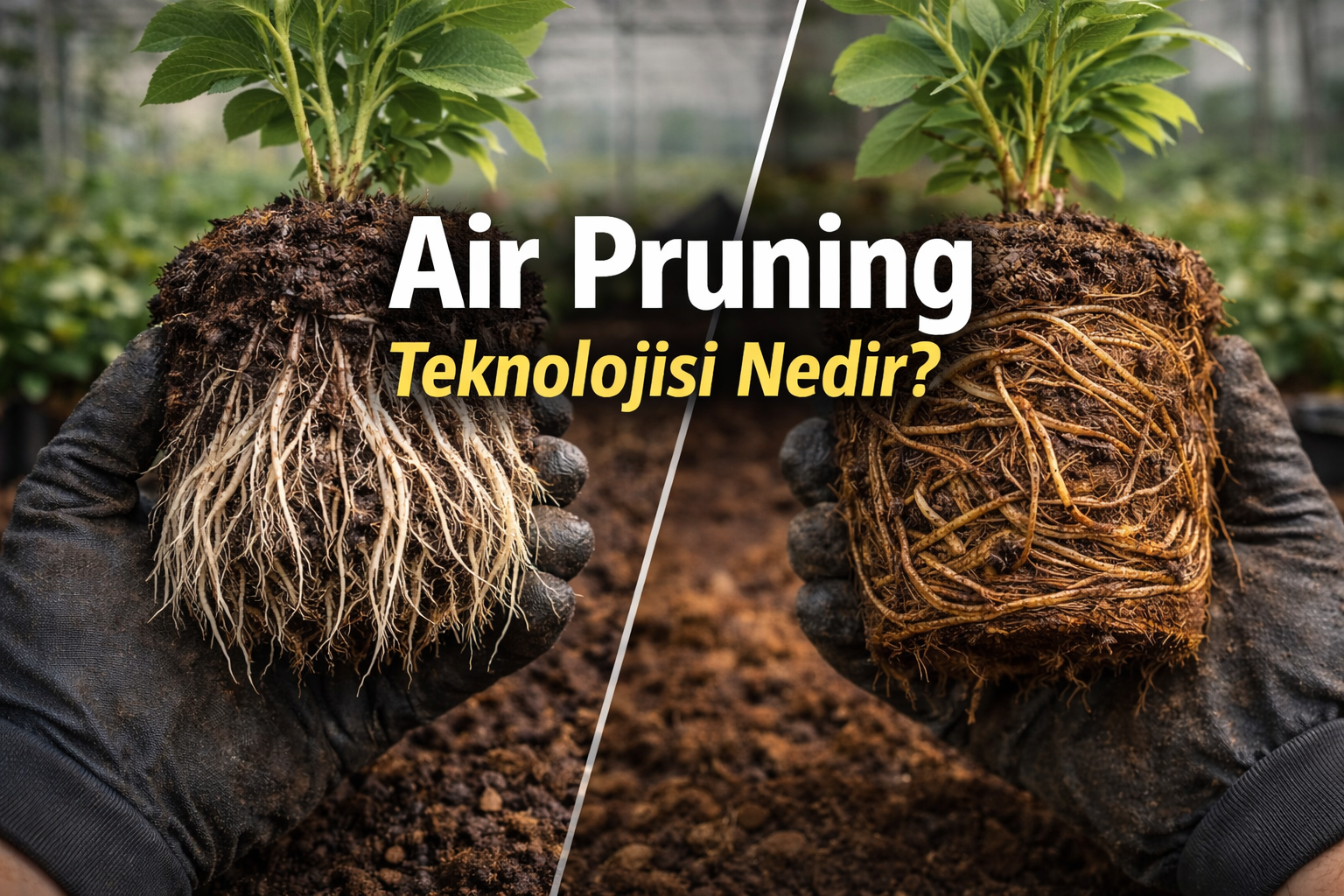
A modern cultivation system that increases yield by controlling root development
Unlike traditional pots, air pruning technology optimizes the root structure, enabling the plant to grow at its best.
One of the major limiting factors in commercial plant production is root development.
Conventional pot systems limit yield by disrupting the natural growth pattern of roots.
The modern solution to this problem: air pruning technology
What Is Air Pruning?
Air pruning is a cultivation method that allows plant roots to be naturally pruned through controlled exposure to air.
In this system:
When the roots reach the side of the pot, they come into contact with air
The root tip dries out (is pruned)
The plant produces new lateral roots
Result: a dense, balanced, and healthy root system
How Does Air Pruning Work?
Step-by-step process:
The root grows and reaches the edge of the pot
Comes into contact with air
The tip sits naturally
It increases the plant's production of lateral roots
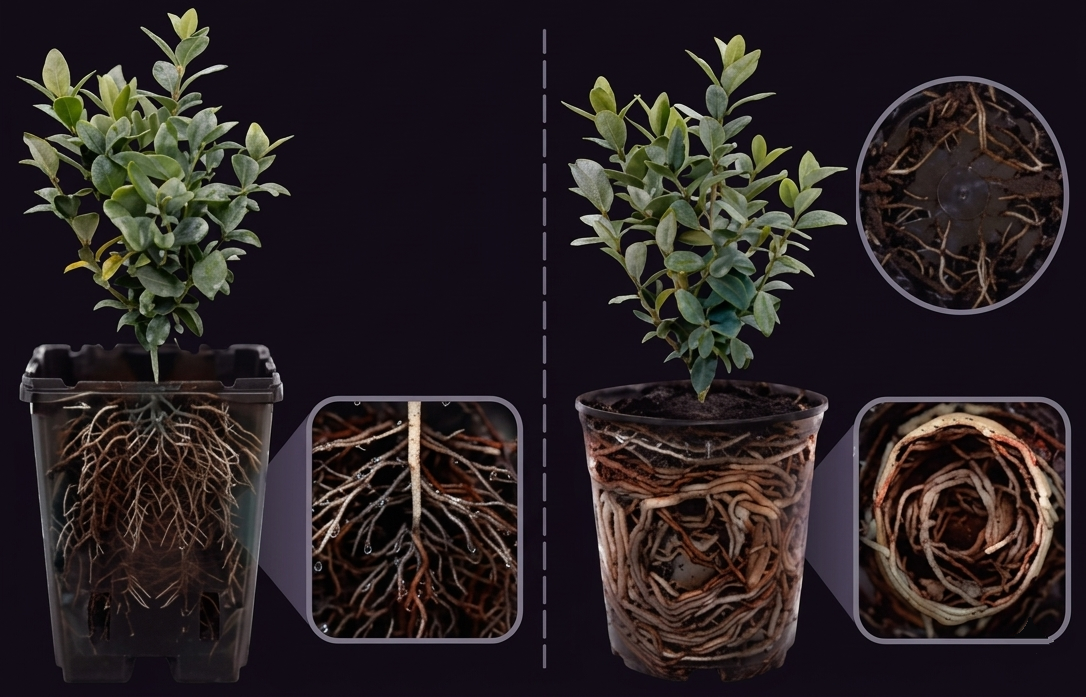
This process repeats continuously, preventing the formation of circular roots in traditional pots
Why Is It Better Than Traditional Planters?
Prevents root rot
Creates more root surface area
Increases food intake
Accelerates plant growth
How Do You Fix the Root-Bound Problem?
Air pruning technology physically prevents roots from becoming tangled inside the pot.
For more information:
Check out our article on "What is root binding?"
Why Is It Preferred in Commercial Production?
A faster growth cycle
Higher yield
A healthier plant
Less stress
That is why professional manufacturers are moving away from traditional systems
Which Plants Is It Suitable For?
Blueberry
Vegetables
Nursery production
Greenhouse plants
It provides maximum effectiveness, especially in species with a delicate root system
Systems That Optimize Root Development
Modern pot systems designed using the air pruning principle optimize the plant's root structure for maximum yield.
Experience Air Pruning Technology
Boost your yield with our new-generation pot systems, designed for professional production.
Frequently Asked Questions
What is air pruning?
It is a system that allows roots to be naturally pruned through contact with air.
Does air pruning really work?
Yes, it accelerates plant growth by increasing root density.
Why should it be used instead of a traditional pot?
Because it prevents root binding and increases yield.
Scientific Findings on Air Pruning and Drainage Technology
-
Root pruning significantly increases the expression of transcription factors associated with vascular tissue development (VcVND6, VcVND7, VcMYB46, etc.) in the blueberry (Vaccinium corymbosum) plant 7, 21, and 42 days after pruning. This activation accelerates xylem differentiation and the cellulose synthesis pathway; it improves the transport of photosynthetic products to the roots via vascular tissues. In the group subjected to appropriate root pruning, a significant increase in above-ground biomass and leaf biomass was observed compared to the control.
Source: Chu L. et al. Plants 2025, 14(15), 2269. DOI: 10.3390/plants14152269
-
Air root pruning has resulted in superior root architecture in container-grown seedlings compared to bare-root seedlings grown in field conditions. The air root pruning system prevents roots from circling the pot wall (root-bound) and promotes lateral root branching and the formation of fibrous roots. This root structure maximizes the plant’s nutrient-absorption surface area, thereby expanding the canopy and reducing transplant shock.
-
In warm climates, when root zone temperatures in container-grown highbush blueberry (Vaccinium corymbosum) plants exceed critical thresholds, this negatively impacts root vitality and plant yield. Proper substrate management and cultural practices play a decisive role in managing root zone temperature, thereby reducing heat-induced root stress and growth losses.
-
Root rot caused by Phytophthora cinnamomi is one of the most serious diseases in blueberry cultivation and is most severe in poorly drained, wet soils. Research has shown that cultural practices that improve drainage (such as raised beds and subsoil tillage) significantly reduce disease severity. In container design, multiple drainage channels and air pockets prevent water accumulation in the root zone, acting as a biological barrier against this pathogen.


